
White sandalwood has long been valued for its fragrance, heartwood, essential oil, and cultural importance. Today, it is also attracting attention from farmers and landowners looking for long-term plantation opportunities. But growing sandalwood trees successfully is not simply about planting saplings and waiting for them to mature. Good results depend on choosing suitable land, healthy plants, compatible host species, proper water management, soil care, and consistent monitoring.
For those exploring white sandalwood farming in Andhra Pradesh, understanding these basics can make the plantation journey more systematic and sustainable.
Choose the Right Land Before Planting
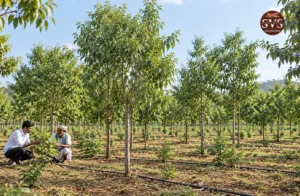
The first step in white sandalwood cultivation is selecting suitable land. White sandalwood (Santalum album) can grow in several soil types, but good drainage is particularly important. Waterlogged areas should be avoided because prolonged excess moisture can affect root health.
Before establishing a plantation, farmers should examine soil characteristics, drainage, water availability, climate, and accessibility. A soil test can also help determine whether amendments or organic matter are needed.
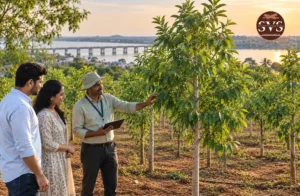
For farmers looking at white Sandalwood plantation in Rajahmundry, evaluating the specific characteristics of the land before investment is an important starting point.
Select Healthy White Sandalwood Plants
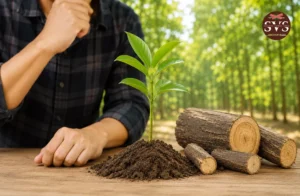
The quality of planting material can influence the early development of a plantation. Choose healthy, disease-free white sandalwood plants from a reliable source rather than selecting saplings only based on size or price.
The plants should be suitable for the local growing conditions and established with appropriate host plants.
Sandalwood is a hemi-parasitic tree, meaning it produces its own carbohydrates through photosynthesis but also obtains certain nutrients and water through connections with host plants.
This makes host-plant planning an essential part of growing sandalwood trees.
Plan Host Plants Along With Sandalwood
One of the most important differences between sandalwood and many conventional plantation trees is its relationship with host plants. A sandalwood plantation needs suitable hosts to support healthy development.
Host species can be planned according to the site, plantation design, and management strategy. SVS Amazing Sandal Farms follows a planned approach involving diverse host species as part of its cultivation model.
Rather than treating host plants as an afterthought, they should be considered while designing the entire plantation layout.
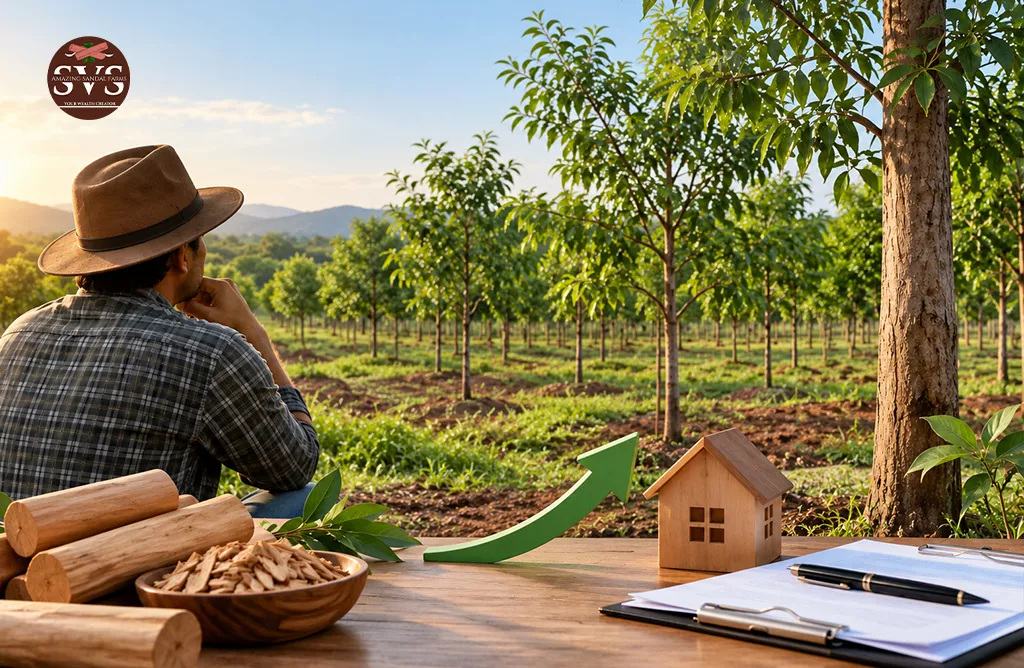
Focus on Soil Health
Healthy soil is the foundation of a productive plantation. Excessive chemical inputs are not the only way to maintain plant growth. Organic matter, natural mulching, composting, and nutrient management can contribute to better soil conditions.
Organic sandalwood farming focuses on maintaining soil health while reducing unnecessary chemical dependence. SVS highlights organic inputs, natural mulching, organic matter enrichment, and nutrient management within its sustainable farming approach.
Regular observation of soil condition is important because the needs of a young plantation can change as the trees and host plants develop.
Manage Water Carefully
Water management is another important factor in white sandalwood farming in Andhra Pradesh. Young plants need appropriate moisture during establishment, while excessive irrigation can be equally problematic.
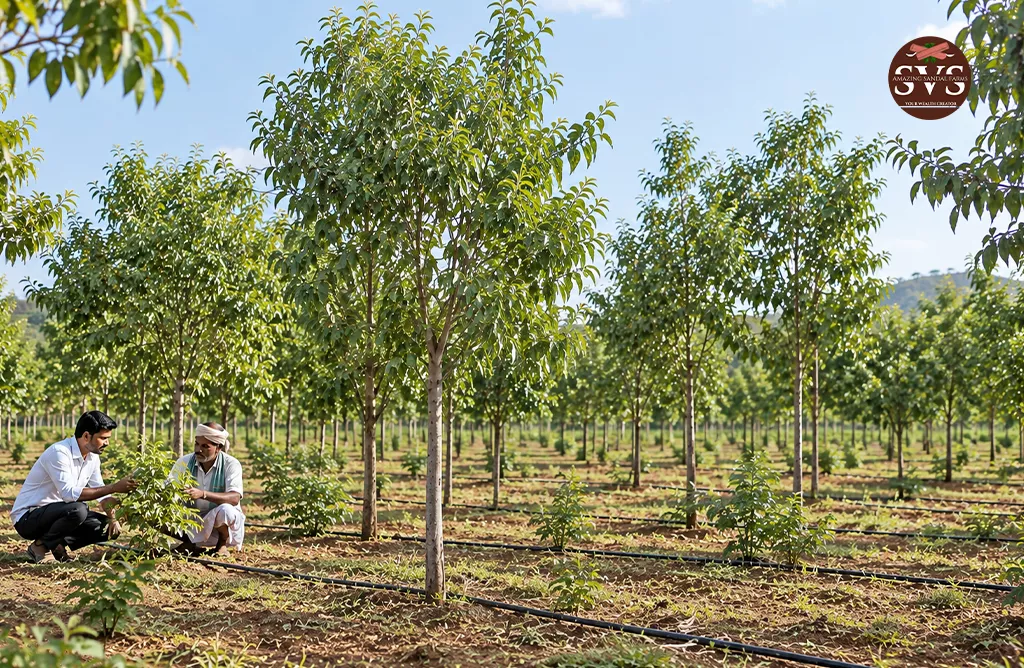
Drip irrigation can help deliver water more efficiently, particularly during dry periods. Water harvesting and conservation measures can further support responsible plantation management. SVS incorporates drip irrigation and water-harvesting practices into its plantation approach.
The goal should not be simply to provide more water, but to maintain suitable moisture without creating waterlogged conditions.
Regular Monitoring Makes a Difference
A plantation requires attention long after planting. Regular inspections can help identify weed competition, pest issues, moisture problems, nutrient deficiencies, or unhealthy growth at an early stage.
SVS describes continuous field inspections, periodic growth assessments, and timely interventions as part of its plantation management process.
This type of ongoing care is especially important for long-duration plantations, where small management decisions made in the early years can influence future growth.
Why Consider Sandalwood as an Agricultural Investment?
Unlike short-duration crops, sandalwood is a long-term plantation asset. Its value is influenced by factors such as tree growth, heartwood formation, market demand, plantation management, and the eventual quality of the wood.
Research indicates that sandalwood can begin forming heartwood within several years, while significant heartwood development generally occurs over a longer period.
For this reason, white sandalwood investment should be approached with a long-term perspective rather than as a quick-profit opportunity.
People considering agricultural investment or farm investment may therefore look at professionally managed plantations as one possible way to diversify into a tangible, nature-based asset. However, returns are not guaranteed and depend on several factors, including plantation performance, market conditions, legal requirements, and harvest timelines.
SVS Amazing Sandal Farms positions its plantation model around land ownership, plantation development, professional management, documentation, and long-term value creation.
Why Rajahmundry Can Be an Interesting Plantation Location
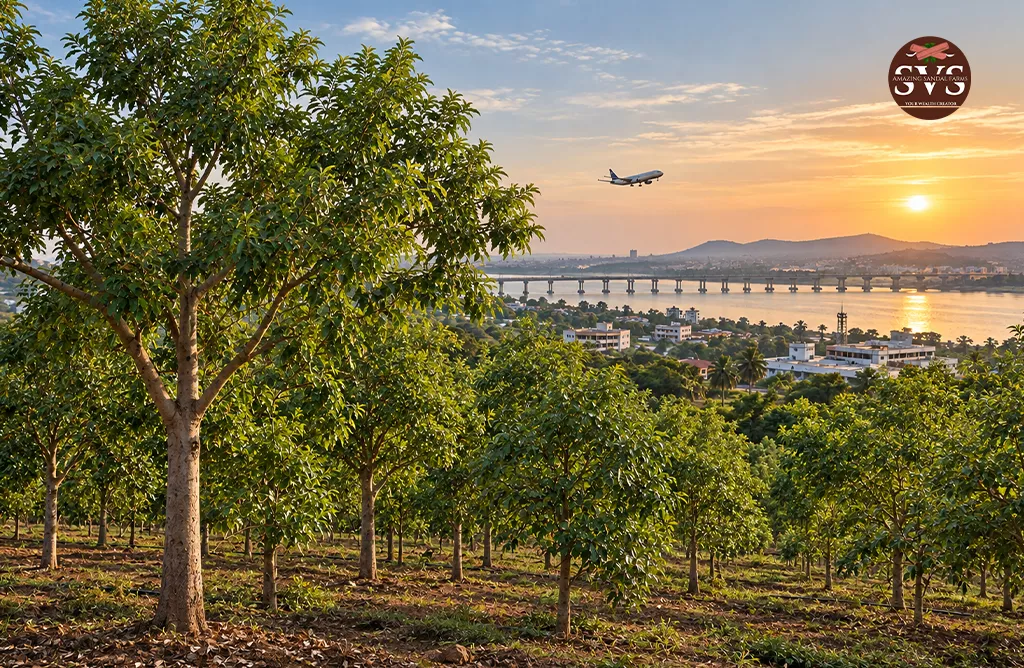
A well-planned white Sandalwood plantation in Rajahmundry can combine agricultural activity with the potential long-term value of land and plantation development. SVS Amazing Sandal Farms is located near Rajahmundry and highlights accessibility, nearby educational and healthcare institutions, airport connectivity, and surrounding development as location advantages.
For anyone considering plantation ownership, the location should still be evaluated based on soil, water, legal documentation, accessibility, plantation management, and the specific terms of the project.
A Long-Term Approach to White Sandalwood Farming
Successful sandalwood cultivation is built on patience and proper management. From selecting the right land and healthy saplings to planning host plants, maintaining soil health, managing irrigation, and monitoring growth, every stage matters.
If you are considering investments with high returns, it is important to look beyond attractive projections and understand the actual plantation model, risks, ownership structure, management responsibilities, and applicable regulations.
At SVS Amazing Sandal Farms, the focus is on combining sustainable cultivation practices with professionally managed plantation development. For prospective investors and farmers, visiting the plantation and understanding the complete process can be a useful step before making an agricultural investment decision.
Frequently Asked Questions
Successful white sandalwood cultivation requires suitable, well-drained land, healthy planting material, compatible host plants, appropriate irrigation, soil management, and regular monitoring. Sandalwood should be managed as part of a complete plantation ecosystem rather than as a standalone tree.
Yes. White sandalwood is a hemi-parasitic species and benefits from suitable host plants for nutrient and water support. Host selection and placement should therefore be considered while planning the plantation.
Sandalwood occurs naturally and is cultivated in several parts of India, including Andhra Pradesh. However, suitability depends on the specific soil, drainage, climate, water availability, and plantation management conditions of the site.
White sandalwood can be considered a long-term agricultural investment, but it should not be treated as a guaranteed-return investment. Plantation growth, heartwood formation, market prices, regulations, management quality, and the investment structure can all influence the eventual outcome.
The timeline varies with growing conditions and management. SVS Amazing Sandal Farms states that its sandalwood plantation is planned around a maturity period of about 12 years, while scientific literature notes that significant heartwood quantities generally develop over a longer growing period.