
Growing trees is not only about planting them in good soil and waiting for nature to do the rest. Like any agricultural activity, a successful plantation needs regular care, suitable soil, sunlight, nutrients, and most importantly, proper water management. For white Sandalwood plantation East Godavari, irrigation plays an important role in supporting healthy tree growth, especially during periods when natural rainfall is limited.
At SVS Amazing Sandal Farms, irrigation is considered an important part of responsible plantation management. A well-planned water supply can help young sandalwood plants establish their roots, maintain healthy growth, and adapt better to changing weather conditions.
Why is Irrigation Important for White Sandalwood?
Water is essential during the early stages of plant growth. Newly planted white sandalwood trees need sufficient moisture around their root zone while they establish themselves in the soil. However, providing water does not mean flooding the plantation. Too much water can be as problematic as too little.
The objective is to maintain suitable soil moisture and support the natural growth cycle of the trees. Depending on the soil type, weather, rainfall, and age of the plants, irrigation requirements can vary.
This is why plantation management should focus on balanced and timely watering rather than following the same schedule throughout the year.
Supporting Young Sandalwood Plants
Young plants are more sensitive to moisture changes than established trees. During their initial growth stage, consistent care can help the plants develop stronger root systems.
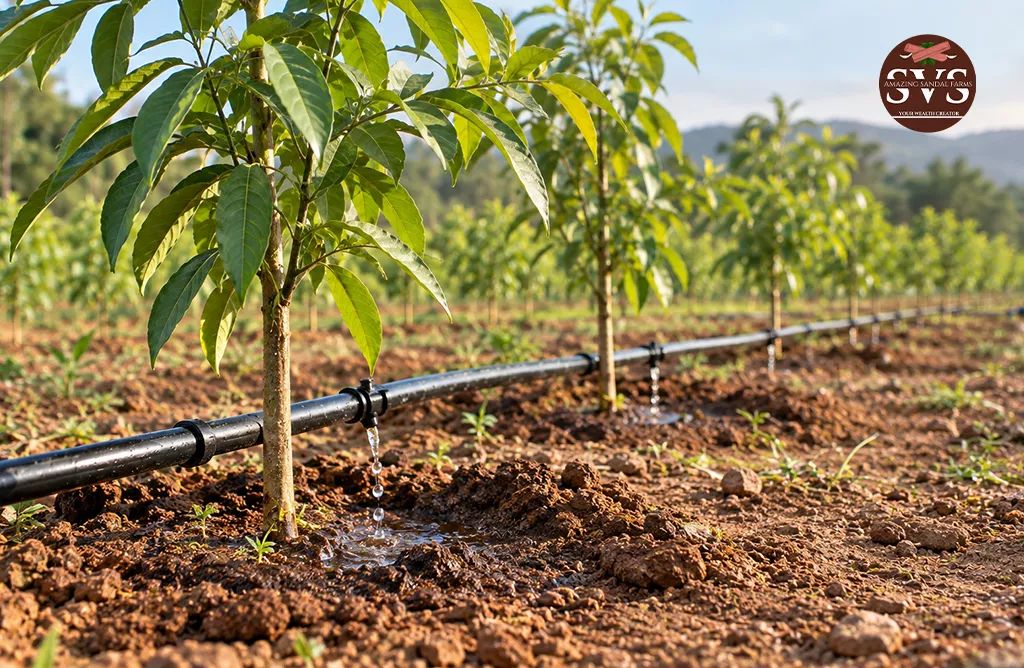
A properly managed irrigation system can provide water directly to the areas where plants need it. This can also reduce unnecessary water loss and make plantation maintenance more efficient.
For people exploring White Sandalwood cultivation, understanding the importance of irrigation is therefore an important part of learning how a plantation is managed from the early stages.
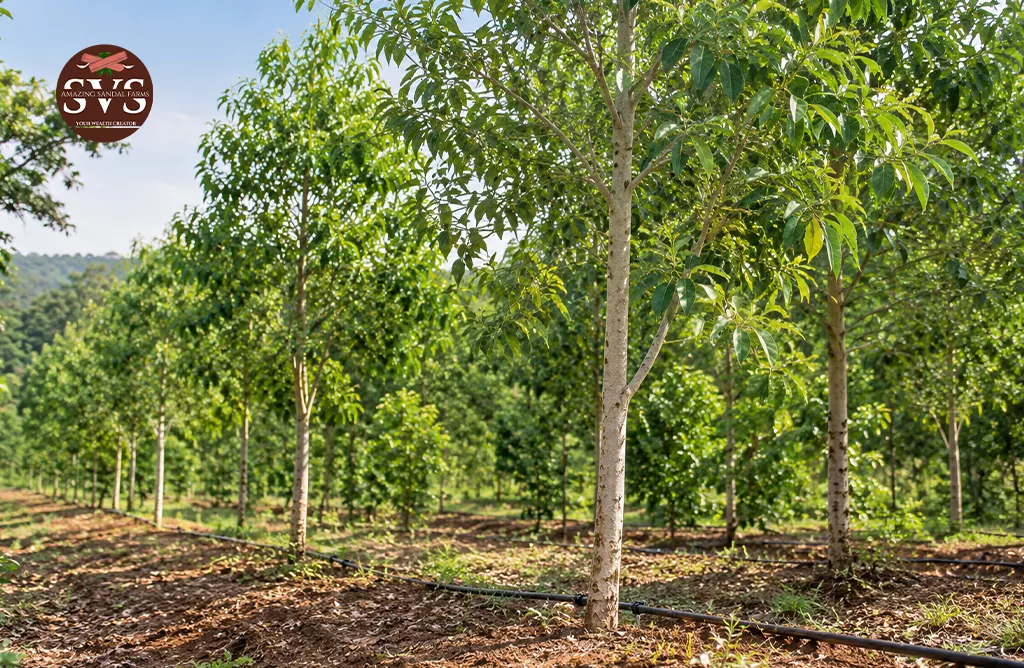
Drip Irrigation for Better Water Management
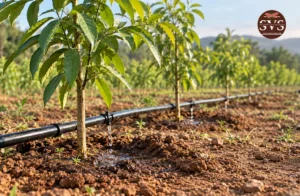
Drip irrigation is commonly considered an efficient method for supplying water to plants because water can be delivered closer to the root zone. Instead of distributing large quantities of water across the entire field, a drip system can provide controlled moisture around individual plants.
This approach can be particularly useful in plantations where efficient water use is important. It may also reduce water wastage caused by excessive surface flow or evaporation.
The exact irrigation requirement should always be decided based on local soil conditions, rainfall, plant age, and professional agricultural guidance.
Irrigation and Organic Sandalwood Farming
Water management is also connected to the broader approach of Organic sandalwood farming. Organic farming focuses on maintaining soil health and supporting natural agricultural processes rather than depending heavily on unnecessary chemical inputs.
Good irrigation practices can work alongside soil enrichment, organic manure, mulching, weed management, and other sustainable farming practices.
For a plantation to remain productive over the long term, every part of the farming process needs to work together. Water, soil, nutrients, sunlight, and regular monitoring all contribute to creating suitable conditions for plant growth.
How Often Should Sandalwood be Watered?
There is no single irrigation schedule that works for every sandalwood plantation. Water requirements can change according to several factors, including:
- Age of the sandalwood plants
- Type and condition of the soil
- Seasonal rainfall
- Temperature and weather conditions
- Drainage facilities
- Moisture levels around the root zone
During rainy periods, natural rainfall may reduce the need for additional irrigation. During dry conditions, plants may require supplementary watering.
Instead of simply increasing the amount of water, plantation managers should observe the soil and plants and adjust irrigation according to actual requirements.
A Simple Guide to Growing White Sandalwood Trees
For anyone searching White sandalwood tree how to grow, irrigation is only one part of the complete process. Successful cultivation involves selecting suitable land, preparing the soil, choosing healthy planting material, maintaining appropriate spacing, managing weeds, providing nutrients, and protecting plants from environmental stresses.
Sandalwood is a long-term plantation crop, so regular monitoring is more valuable than short-term attention. Small steps such as checking soil moisture, maintaining irrigation systems, and observing plant development can make plantation management more organized.
Beyond Soil: Key Factors for a Successful Sandalwood Plantation
When people search for agriculture land for sale, they may be looking for land that can support both agricultural activity and long-term plantation development. However, the suitability of land should be carefully evaluated before making any agricultural investment.
Factors such as soil quality, water availability, drainage, accessibility, climate, and plantation management practices should be considered.
At SVS Amazing Sandal Farms, the concept of Plots with White Sandal Plantation in Rajahmundry combines agricultural land with planned white sandalwood plantation. This provides an opportunity for people interested in understanding plantation-based land investments while being part of an agricultural environment.
Understanding the Long-Term Value of White Sandalwood Plantation
Agricultural plantations are generally long-term ventures and should not be viewed as instant-return opportunities. White sandalwood is valued for its wood and applications across areas such as fragrance, cosmetics, and traditional uses.
Because plantation growth takes time, people considering investments with high returns should understand that returns are influenced by factors such as plantation management, tree growth, market conditions, applicable regulations, and the eventual value of the produce.
A responsible approach is to understand the plantation model, land documentation, maintenance practices, expected timelines, and associated risks before making any investment decision.
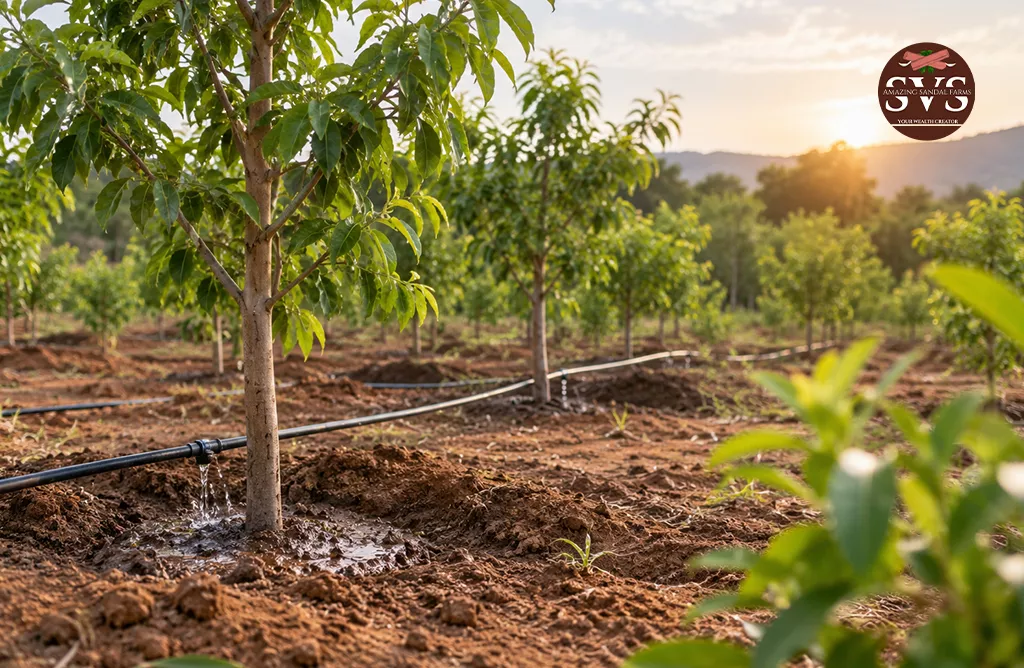
Why Smart Irrigation is Essential for Long-Term Plantation Growth
A healthy plantation is built through consistent care rather than a single activity. Irrigation supports the foundation of that care by helping plants receive appropriate moisture when rainfall alone is insufficient.
From young saplings to established trees, water management needs to evolve with the plantation. Regular observation and efficient irrigation can help create better growing conditions while supporting responsible use of available water resources.
For those exploring white Sandalwood plantation in Rajahmundry, irrigation is one of the important aspects to understand before choosing a plantation or agricultural land opportunity.
Conclusion
White sandalwood cultivation is a long-term agricultural journey that requires patience, planning, and regular care. Irrigation plays an important role in this journey by helping maintain suitable soil moisture and supporting healthy plant development.
From drip irrigation and soil management to organic practices and regular monitoring, each step contributes to better plantation management. For anyone considering Plots with White Sandal Plantation in Rajahmundry, understanding how water management works can provide a clearer picture of what responsible plantation care involves.
At SVS Amazing Sandal Farms, the focus is on combining agricultural land with planned white sandalwood plantation while encouraging people to understand the value of sustainable and long-term farming practices.
Frequently Asked Questions.
Irrigation helps maintain suitable soil moisture, especially during dry periods. Proper watering supports healthy root development and steady growth of young white sandalwood plants.
Yes, drip irrigation can be a useful method for sandalwood cultivation. It delivers water closer to the root zone and can help reduce unnecessary water wastage.
There is no fixed watering schedule for every plantation. Irrigation depends on soil type, plant age, rainfall, temperature, and moisture levels. Watering should be adjusted according to actual field conditions.
Yes. Excessive watering can lead to poor drainage and waterlogging, which may negatively affect root health. Maintaining balanced soil moisture is important for healthy plantation growth.
Besides irrigation, white sandalwood cultivation requires suitable land, healthy planting material, proper spacing, soil management, nutrients, weed control, drainage, and regular monitoring.